Search Arbitrage for Digital Marketing Startups: Easy 3-Step Framework (2026)
✅ Introduction
In today’s competitive market, Search Arbitrage for Digital Marketing Startups offers a practical, low-risk way to generate revenue more quickly by acquiring high-intent search traffic at a lower cost and directing it to optimized, monetized landing pages. When CPC is consistently kept below RPM or RPC, this model enables rapid testing, stable scaling, and predictable ROI without unnecessary spend.
In this guide, Golam Kibriya breaks down a simple three-step framework for setting up, optimizing, and scaling the model—along with common pitfalls that can silently drain profit—so you can grow with confidence.
✅ Why Search Arbitrage Works for Startups
Search arbitrage is a traffic monetization model in which visits are purchased inexpensively from one channel and redirected to a monetized search or advertising page that yields higher revenue per visit. Profit is generated from the gap between the cost per click (CPC) and the earnings per click (EPC/RPC) when visitors engage with ads on the search feed.
The Core Idea (Buy Low, Earn High)
Think of it like retail arbitrage, but with attention:
- Cost side: you purchase low-cost traffic from sources like TikTok, Facebook, native ads, push, pop, etc.
- Revenue side: that traffic lands on a page that routes users into a search feed / SERP-style results (often via providers partnered with Bing/Yahoo/Google). When users click sponsored results, you get paid.
- Profit formula: Profit per visitor = EPC (earnings per click) − CPC (cost per click).
How it Works in Practice (Simple Flow)
- Run ads on a cheap traffic source.
- Send users to a pre-lander/lander optimized to spark a search (buttons, trending topics, quizzes, etc.).
- User performs a search or clicks into a monetized results page.
- You earn RPC/EPC from ad clicks on that feed.
- Optimize & scale winners; pause losers.
✅ 3-Step Search Arbitrage Framework for Startups
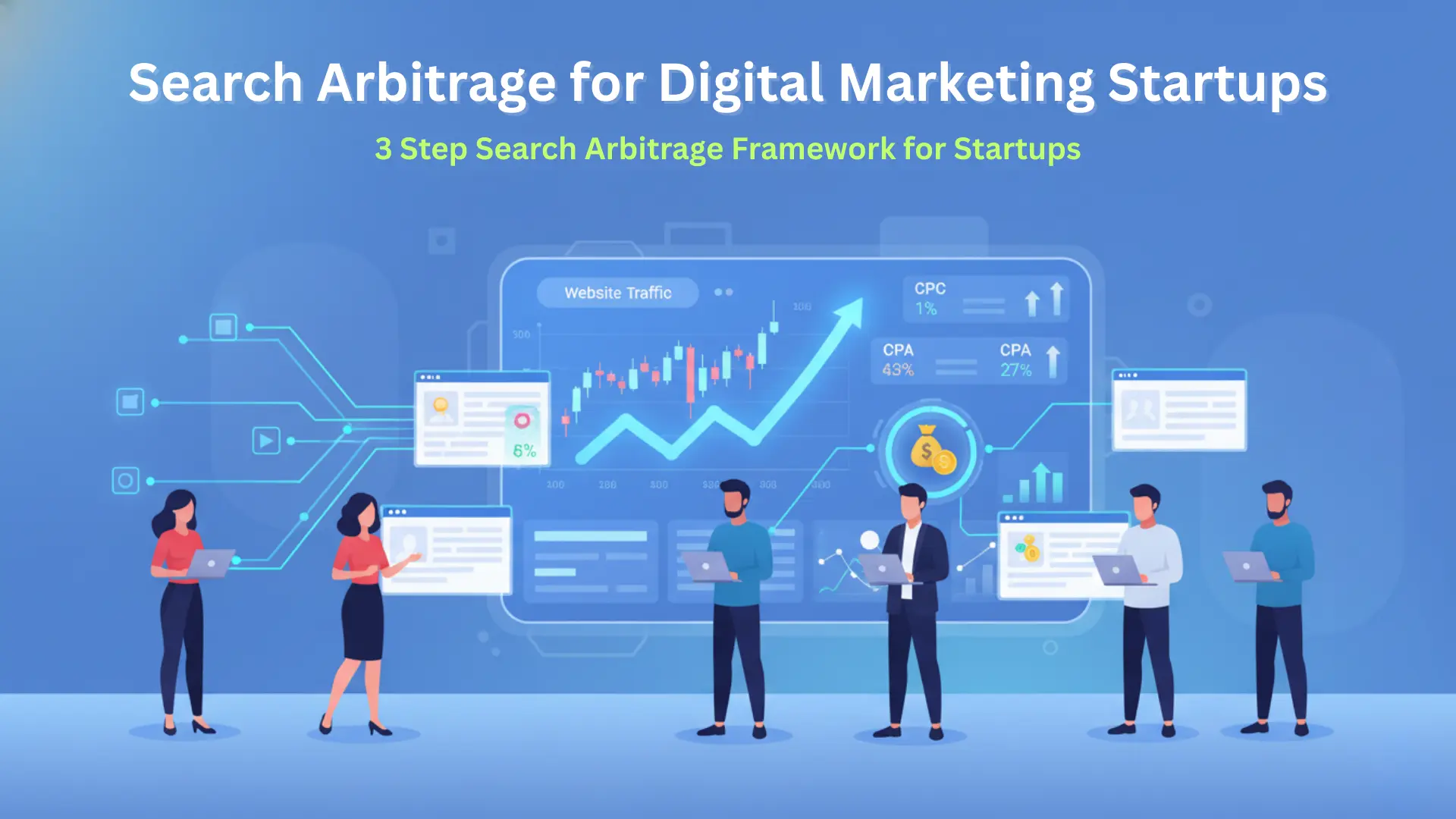
This section explains how search arbitrage for digital marketing startups can be structured using a clear three-step framework to maximize intent, control CPC, and secure margins.

This framework outlines the core steps that enable startups using this method to build a predictable, scalable growth system. Each stage focuses on increasing traffic quality, reducing costs, and maximizing revenue per visitor.
🔧 Step 1 – Market Mapping
Startups that employ search arbitrage begin by identifying markets in which low CPC and strong buyer intent overlap. The primary objective is to pinpoint audiences, keywords, and placements that exhibit high intent at the lowest possible cost. This typically involves testing advertising channels such as Google Ads, native networks, and selected social traffic sources to identify underpriced entry points. When executed effectively, market mapping establishes a stable foundation for scaling and ensures that incoming traffic remains both cost-efficient and highly relevant.
🔧 Step 2 – Traffic Optimization
For startups using this system, traffic quality matters more than volume—because profitability depends on intent, not just clicks. Traffic optimization focuses on continuously improving ad performance through testing creatives, headlines, formats, and landing-page alignment. By filtering low-value segments and doubling down on audiences that engage well, you can steadily reduce CPC while increasing earnings per visit. Over time, this creates stronger, more efficient campaigns that compound profit.
🔧 Step 3 – Scaling & Automation
Once a funnel becomes profitable, startups scale by expanding keywords and placements—but it’s crucial to scale arbitrage safely to avoid margin loss and account risk—while keeping CPC safely below RPM. Scaling starts by increasing budgets on proven winners, then expanding reach to new audiences and formats without compromising unit economics. At this stage, automation tools like smart bidding, rule-based adjustments, and segmented retargeting help protect margins as volume increases. When implemented consistently, this approach turns a successful arbitrage setup into a repeatable, long-term growth engine.
✅ How Search Arbitrage Works for Startups (Simple Breakdown)
Search arbitrage is a scalable, performance-driven model where low-cost traffic is redirected to monetized landing pages that yield higher revenue per visit. This “buy low, monetize high” strategy enables rapid testing, real-time optimization, and measurable ROI—making it especially effective for early-stage digital ventures.
🎁 Ready-to-Build 3 Options
Would you like a template or an editable design file?
Here’s what I can offer:
1. Google Slides Template
- Clean, modern design
- Editable with your branding (logo, colors, fonts)
- Shareable link for collaboration
2. PowerPoint (.PPTX) File
- Slide layout based on the structure above
- Ready to customize with your content and brand assets
3. Canva Template
- Easy drag-and-drop interface
- Great for non-designers
- Includes icons and simple visuals
✅ Key Benefits of Arbitrage for Founders
A paid traffic arbitrage model gives early-stage teams a faster, lower-risk route to scalable growth. When executed well, it allows founders to buy undervalued clicks, route them through optimized monetization flows, and earn more per visit than they spend—turning rapid experimentation into predictable profit.
🚀 1. Faster Revenue Generation
Startups using this approach can shorten the path from traffic to cash flow. Instead of waiting months for compounding SEO results, they launch monetized landing experiences and see earnings within days.
How this helps
- Monetized pages convert low-cost traffic into revenue quickly.
- Profitable angles are proven fast, then scaled with confidence.
🔍 2. Low-Risk Market Testing
As an arbitrage-based growth strategy, this model makes market validation cheaper and faster. You can explore multiple niches, audiences, keywords, or geos without overcommitting budget.
Why it matters
- Test many ideas in parallel with small spends.
- Pause weak campaigns instantly to avoid waste and protect margins.
💸 3. Positive Use of Ad Spend
Every dollar goes toward placements that are already showing intent and positive unit economics.
What founders gain
- Real-time data shows which sources convert and which don’t.
- Budgets shift to winners, keeping CPC below earnings per click.
📈 4. Scalable, Data-Driven Growth
With low-cost search traffic monetization, scaling becomes a numbers-first process, not a guess. Once earnings per visit stay ahead of cost, you expand campaigns systematically across new segments.
Scaling principles
- Increase spend only where RPM/RPC stays ahead of CPC.
- Replicate winners across new keywords, segments, and regions.
🧠 5. Stronger Monetization per Visit
The rule that keeps everything profitable is simple: buy cheap clicks, earn higher RPM, then reinvest only where the spread remains consistently positive.
✅ Smart Paid Advertising Strategy
A smart paid ad strategy helps startups using search arbitrage drive targeted traffic, test quickly, and scale only what stays profitable. The key is disciplined spending—optimizing every click so cost never outruns return.

1. Smart Bidding & CPC Reduction
For startups using this method, smart bidding is less about chasing volume and more about protecting margin. Start with conservative bids on high-intent queries, then increase only where earnings per click consistently beat cost.
See the example below:
- Tight keyword themes and intent-heavy ad groups
- Negative keywords to block low-quality segments
- Landing-page alignment to lift conversion value
- Bid caps that keep CPC safely below RPM
2. Retargeting Audience
Retargeting reconnects with users who’ve already shown intent, making it one of the most efficient ways to lift performance. For startups using this model, warm-audience messaging increases conversions and reduces acquisition costs without pushing CPC up.
3. Best Traffic Sources
Different platforms offer unique advantages for profitable arbitrage campaigns:
- Google Ads — High-intent search traffic with strong keyword control
- Native Ads (Taboola, MGID, Outbrain) — Scalable reach, often at lower CPC
- TikTok Ads — Fast volume and creative-led discovery
- Facebook Ads — Excellent for retargeting and interest-based expansion
Combining multiple sources helps diversify risk and uncover new profitable segments faster.
4. Paid Ad Mistakes to Avoid
Many founders lose money by rushing into paid campaigns without structure. An arbitrage-based growth strategy only works when the math is protected from day one. Avoid these common mistakes:
- Launching campaigns without A/B testing
- Sending traffic to slow, unclear, or mismatched landing pages
- Overbidding without tracking CPC vs. RPM/RPC
- Scaling before a stable profit spread is proven
- Ignoring traffic-quality signals (bounce rate, time-on-page, conversion depth)
Simple safeguard: Buy cheap clicks, earn higher RPM—then scale only where the spread remains consistently positive.
As Golam Kibriya teaches, every paid campaign should start small, measure precisely, and scale only when profitable.
✅ Content Marketing for Trust & Authority
While paid ads drive fast traffic, content marketing builds long-term trust and credibility. For startups using search arbitrage, pairing strong content with performance marketing creates a balanced growth strategy—supporting both short-term revenue and long-term brand strength.
Content builds user confidence by educating, guiding, and reassuring. Valuable assets like articles, tutorials, and case studies improve engagement and boost the effectiveness of monetized landing pages.
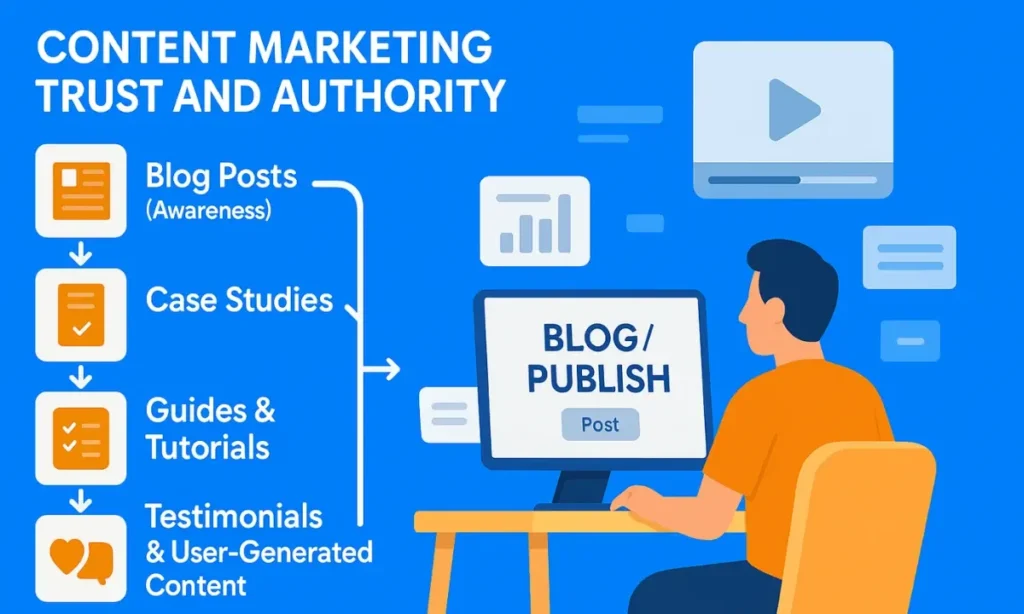
🧩 Why Content Still Wins in 2026 (Even with Arbitrage)
Key Message: Content builds long-term trust, improves acquisition efficiency, and boosts paid performance.
- Content remains a top channel for organic growth despite increased competition
- It builds credibility through expertise and transparent communication
- It enhances paid media ROI by improving user trust and engagement
- It attracts high-intent traffic and supports sustainable SEO
🧩 Purpose-Driven Content That Solves Real Problems
Key Message: Effective content meets users where they are—answering the right questions at the right time.
- Addresses real user challenges (e.g., tool selection, growth strategy)
- Builds authority and relevance through value-focused topics
- Drives deeper engagement and fosters long-term brand loyalty
🧩 How-To Guides, Tutorials & Comparison Pages
Key Message: Actionable formats that attract high-converting traffic.
- These formats help users quickly understand solutions
- They position the startup as a helpful, expert resource
- They often appeal to users who are closer to converting
- They are especially valuable in arbitrage-focused funnels
🧩 Case Studies & Customer Stories
Key Message: Proof builds trust.
- Showcase real-world success and performance metrics
- Reinforce strategic value through authentic outcomes
- Reduce buyer skepticism and boost confidence in the model
🧩 Data-Based Topics for Fast Ranking
Key Message: Fast SEO wins through search intent alignment.
- Target long-tail, low-competition keywords
- Attract highly motivated, niche audiences
- Support a broader SEO strategy with quick traction
🧩 Top Content Formats for Startup Growth
Key Message: Multi-format content meets users across channels and stages.
✅ High-performing formats include:
- Blog posts & long-form guides
- eBooks & whitepapers
- Short-form videos & social posts
- Infographics & visual explainers
Benefit: These formats support both brand awareness and conversion, making them ideal partners for performance marketing and arbitrage campaigns.
✅ Social Media Strategy for Modern Startups
For startups using this model, using social media as a strategic channel helps increase low-cost traffic, strengthen retargeting, and build deeper community engagement.

📍 Choosing the Right Platform
Match platforms to your audience and goals:
- TikTok & Instagram – Great for storytelling, virality, and visual content (TikTok Ads guide).
- LinkedIn – Ideal for B2B messaging and thought leadership
- Facebook – Strong for retargeting and community engagement
✅ Strategic platform selection = higher ROI and more predictable results
💬 Social Media as a Customer Experience Channel
Today’s users expect real-time, authentic engagement.
- Social media now serves as frontline customer support
- Messaging apps (e.g., Instagram DM, Facebook Messenger) outperform email
- Fast, conversational responses build trust and loyalty
🎥 Content Formats That Dominate in 2026
Formats that boost reach, engagement, and conversions:
- Short-form video (Reels, TikTok, Shorts)
- Carousels (LinkedIn, Instagram)
- UGC (user-generated content)
- Live sessions & interactive storytelling
📈 Use format variety to move users through every stage of the funnel
❤️ Turning Followers Into Loyal Advocates
Loyalty is built through interaction and inclusion:
- Respond to comments and messages
- Share user-generated content and feedback
- Encourage participation through polls, Q&As, and challenges
🤝 Engaged followers become your most effective brand ambassadors
📌 Why It Matters for Startup Growth
- Increases conversion efficiency by building trust
- Adds scalability to paid campaigns
- Supports brand equity and long-term retention
- Builds a loyal community that boosts LTV
💡 Presentation Tip
To make this deck more engaging, consider using:
- Real social content examples (yours or competitors)
- Metrics from past campaigns (CTR, engagement, cost-per-lead)
- Icons or minimal visuals to break up slides
- Speaker notes with live case examples or anecdotes
✅ Google Analytics & Reporting for Search Arbitrage Startups (2025 Edition)
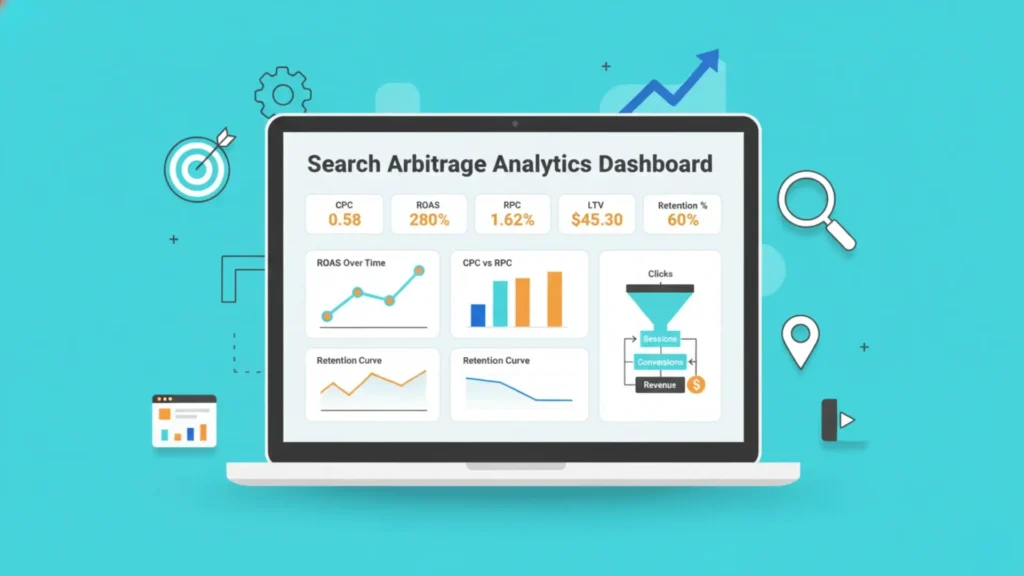
Google Analytics helps you track:
- Traffic quality
- Cost efficiency
- Landing-page performance
- Lifetime value
- Retention rates
🧭 What Analytics Helps You Do
Google Analytics reveals which traffic sources perform best, which landing pages convert, and where users drop off. With these insights, this model becomes predictable rather than experimental, helping teams optimize revenue per visitor, engagement depth, and retention signals in real time.
Google Analytics powers strategic clarity:
- Identify high-performing campaigns and traffic sources
- Understand user behavior on monetized landing pages
- Pinpoint revenue opportunities across the funnel
- Optimize acquisition and retention strategies in real time
✅ Better data = better decisions = better ROI.
🔄 What Changed in 2025 — Why Analytics is Even More Important
Privacy updates have reshaped performance marketing:
- Privacy & tracking changes: browser rules and reduced third-party cookie support have weakened many old retargeting and attribution methods.
- Platforms favor data-rich accounts: ad networks now prioritize first-party data, modeled conversions, and server-side tracking.
- Real-time accountability matters more: as CPMs and CPCs rise, every dollar must be monitored so inefficiencies are caught early.
Because of these shifts, startups without strong analytics risk overspending, misattributing results, or scaling unprofitable campaigns—while teams using data-driven reporting can stay lean, efficient, and scalable.
🚀 How Startups Use Analytics — A Success Example
Case: A SaaS Startup Leveraging Advanced Analytics
✅ Server-side tracking maintains attribution accuracy
✅ CAC & eRPC monitoring reveals true traffic profitability
✅ Cohort analysis highlights retention trends
✅ Modeled conversions restore visibility after privacy updates
Results: improved ROI, lower churn, and smarter budget allocation—analytics becomes a long-term growth engine.
🎯 Why It Matters to Investors
- Demonstrates operational discipline through data-driven decisions
- Enables scaling while keeping CAC controlled
- Future-proofs the business against platform and privacy shifts
- Builds a repeatable foundation for measurable growth
✅ Analytics for Search Arbitrage Campaigns (2025 Edition)
| Pillar | Focus Area | Key Metrics | Strategic Goal |
|---|---|---|---|
| 🔍 Search | Visibility & Engagement | – Organic Impressions – Search Visibility Score – SGE Inclusion Rate – CTR (Click-Through Rate) – AI Snapshot Position | 🎯 Maximize discoverability across search and AI platforms |
| 💰 Acquire | Cost & Revenue Efficiency | – CAC (Customer Acquisition Cost) – Blended ROAS – eRPC (Earnings Per Click) – AI-Assisted Attribution – Conversion Quality Score | 📈 Scale only high-ROI traffic sources |
| 📈 Experience (X) | Retention & Lifetime Value | – Predicted LTV – Stickiness Score (DAU/MAU) – Cohort Retention – AI Churn Probability – NPS × Engagement Heatmap | 🧠 Optimize for long-term user value and retention |
✅ Core Advantages of Social Platforms
When combined with search arbitrage, the benefits of this social platform help startups increase traffic efficiency, improve retargeting accuracy, and accelerate scalable growth.
Startups gain five key advantages:
- 📣 Wider Reach at Lower Cost
Reach large audiences organically with minimal spend. - ✅ Boost in Conversions via Social Proof
User reviews, testimonials, and comments influence decision-making. - 👥 Authentic Trust Through UGC
User-generated content builds credibility and community loyalty. - 🔁 Enhanced Retargeting Efficiency
Social platforms support highly targeted, behavior-based retargeting. - 📊 Scalable Lookalike Audiences
Platforms like Meta and LinkedIn help scale reach to similar high-value users.
✅ Case Study — SaaS Startup Growth Challenges
Many SaaS startups struggle to maintain growth due to rising acquisition costs, slow organic traction, and unpredictable paid campaign performance. For early-stage teams, these challenges often stall momentum before product-market fit is fully validated.
🔍 What Went Wrong
The startup relied heavily on broad search campaigns that pulled in low-intent users. Without a structured funnel or optimized landing flow, CPC increased while conversion rates stayed flat. As budgets tightened, performance instability became unavoidable.
🛠 How the Arbitrage Approach Helped
By applying an arbitrage-based growth strategy, the team identified underpriced keywords and refined targeting to attract users with stronger intent. This shifted the acquisition model from “volume-first” to “intent-first,” reducing wasted spend and improving early conversions.
📉 Key Loss Factors
- Landing pages weren’t aligned with user intent
- Bidding was inconsistent, driving CPC above earning potential
- Weak retargeting flows caused cold-traffic drop-off
- No structured A/B testing to validate angles
📈 Results After Optimization
With a more disciplined structure and data-backed iteration, this model helped stabilize acquisition costs and increase revenue per visit. The startup gradually expanded winning segments, raised retention, and restored predictable growth momentum.
✅ Frequently Asked Questions (FAQs)
❓1. What is search arbitrage in digital marketing?
Answer:
It’s a strategy where you buy low-cost traffic and send it to monetized pages to make a profit. The key is earning more from the traffic than you spend on it — and staying compliant with platform rules.
❓2. Is search arbitrage legal and safe for startups?
Answer:
Yes — if you follow platform policies and provide honest, user-friendly content. Avoid misleading ads or shady tactics, and you’ll stay on solid ground.
❓3. How much budget is needed to start search arbitrage?
Answer:
An initial test budget ranging from $500 to $1,500 is typically sufficient to begin a search arbitrage campaign. This budget enables startups to evaluate traffic sources, landing pages, and monetization models. Scaling efforts should occur only after achieving a consistent and positive return on investment (ROI).
❓4. What are the biggest risks when scaling search arbitrage?
Answer:
The primary risks associated with scaling search arbitrage include ad account suspensions, declines in traffic quality, rising cost-per-click (CPC) rates, and monetization instability. Rapid scaling without adequate tracking mechanisms and strict compliance with platform policies often results in financial losses. Gradual scaling, supported by continuous data validation, can help mitigate these risks.
❓5. How can startups avoid Google Ads account suspension?
Answer:
Be honest in your ads, match your landing page to your message, and avoid cloaking or redirects. Stick to the rules, scale gradually, and check for policy updates regularly.
✅ Conclusion
By following this Search Arbitrage for Digital Marketing Startups framework, teams can improve performance, stay compliant with advertising policies, and scale profitably over time.
Search arbitrage offers founders a disciplined approach to growth in a market where CPC continues to rise, and organic traction requires time. By focusing on intent-first traffic, optimized monetization flows, and tight unit economics, startups can test rapidly, eliminate waste, and scale only what remains profitable. With a clear three-step framework and enhanced analytics, this model becomes repeatable rather than experimental—transforming inexpensive clicks into predictable revenue. For those seeking to accelerate learning curves and protect margins while scaling globally, SearchADX can help build and optimize campaigns with confidence.
👉 Visit SearchADX.com