How to Profit from Search Arbitrage in 2026 (Smart Monetization Guide)
🧩 Introduction
Learning how to profit from search arbitrage starts with a simple principle: traffic costs must remain lower than the revenue generated per visitor. Sustainable results come from combining affordable clicks with landing pages designed to maximize ad performance. Metrics such as CPC, RPM, CTR, and user intent play a critical role in determining whether campaigns remain profitable over time. When traffic aligns closely with content, visitors engage longer, and conversion potential increases. Building relevance, improving user experience, and continuously refining performance—an approach emphasized by Golam Kibriya—is essential for long-term success.
🧩 How Search Arbitrage Generates Profit Through Ad Traffic
Search arbitrage works best when traffic costs stay below the revenue generated per visitor. The model relies on pairing affordable traffic sources with landing pages designed to maximize ad performance. Long-term profitability comes from maintaining a clear margin between acquisition costs and earnings from user engagement. When visitor costs remain controlled, and revenue per visit stays consistent, campaigns are far more likely to deliver sustainable returns.

Several key components influence profitability:
- CPC (Cost per Click): The amount you pay for each visitor.
- RPM (Revenue per Thousand Impressions): How much your landing page earns per 1,000 ad impressions.
- CTR (Click-Through Rate): How often visitors interact with ads.
- User Intent: How well a visitor’s expectations match the content on the page.
When traffic closely matches the content, visitors tend to stay longer, explore more pages, and engage more naturally—resulting in stronger monetization potential. On the other hand, poorly matched traffic often leads to quick exits, limiting ad exposure and reducing overall revenue.
In practical use, making search arbitrage profitable relies on relevance, user experience, and ongoing optimization—skills that Golam Kibriya emphasizes in his approach to smart ad-traffic monetization.
🧩 How to Profit from Search Arbitrage by Choosing the Right Traffic Sources
When you run a search-arbitrage setup—buying cheap traffic, sending it to a landing page, and earning money from ads—the traffic source you choose has a huge impact on whether you make a profit. Below, I’ll go over the four main paid-traffic channels (Search Ads, Native Ads, Display PPC Networks, and Social Ads), share real benchmark data, and explain which ones work best for arbitrage and why.
Achieving this depends on how well you balance:
- Traffic Cost
- User Intent
- Landing Page Monetization Efficiency
📊 Traffic Source Comparison Overview
| Traffic Source | Typical Cost Level | Typical User Intent | Best Used When |
|---|---|---|---|
| Search Ads | Higher | High (active search) | Keywords align with monetizable offers and strong landing pages |
| Native Ads | Moderate | Medium (content discovery) | Engagement and ad yield matter more than conversions |
| Display PPC | Lower | Low (browsing) | Scale and impression-based monetization drive returns |
| Social Ads | Variable (CPM-based) | Low–Medium (interest-based) | Strong creatives or offers hold user attention at scale |
🔍 Search Ads
For many advertisers, learning how to profit from search arbitrage using search ads starts with matching the right keyword intent to high-performing landing pages.
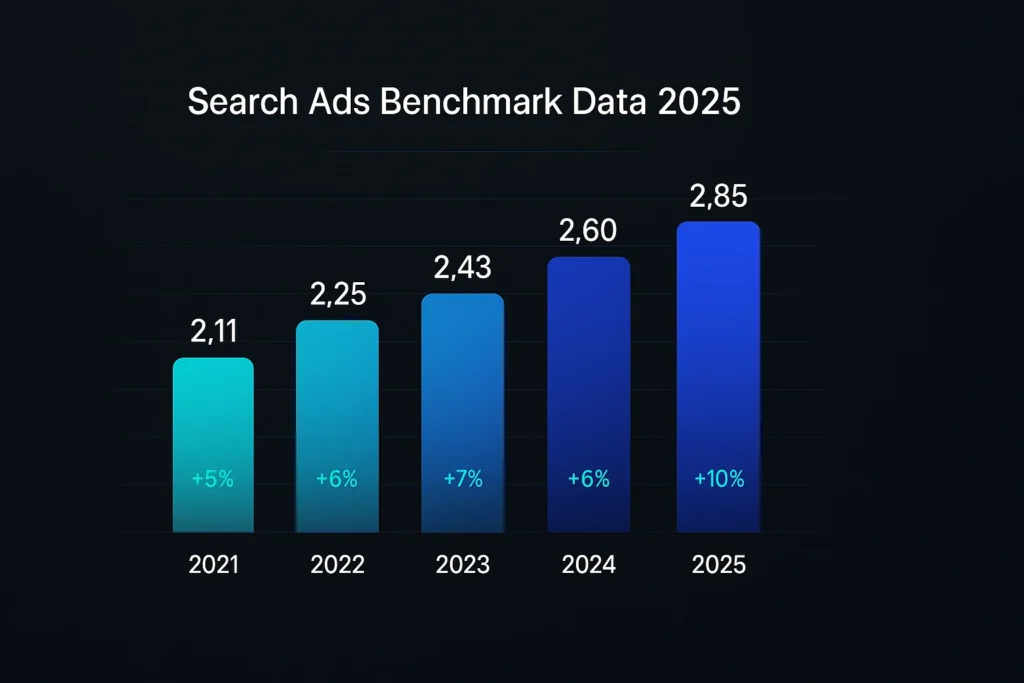
These benchmarks explain why keyword selection and landing page efficiency matter more than ever in search arbitrage.
Overview
Search ads show up when people type keywords into Google, Bing, or other search engines. Because these users are already looking for something specific, this kind of traffic usually converts better. The downside is that search ads often cost more per click (CPC) because many advertisers are competing for the same high-intent keywords.
Key Benchmark Data
- In 2026, across industries, the average click-through rate (CTR) for Google Search campaigns is approximately 6.75%, according to the latest data from WordStream.
- The average CPC for search ads in 2026 is approximately US$ 4.90, reflecting modest year-over-year cost increases.
Why Arbitrage Matters in Paid Search Marketing
For seasoned digital marketers, search ads present a valuable arbitrage opportunity. Because users are actively searching for specific information, this type of traffic tends to be high quality and easier to monetize—whether through ads, affiliate offers, or optimized conversion funnels.
However, to drive profitable outcomes, returns must justify acquisition costs. With high cost-per-click (CPC) rates and intense competition, success requires precise targeting. Keywords must align closely with user intent, and landing pages should reflect that intent with speed, clarity, and strong conversion design.
Best Fit When:
- Your keywords capture high-intent queries from users ready to purchase, compare options, or take a specific action.
- Your landing page is tailored to match that intent and is fully optimized for performance, clarity, and conversion efficiency.
- You are prepared to work with higher CPCs while still maintaining profitable unit economics.
⚠️ Caution: If CPCs increase rapidly or if your monetization strategy underperforms, profit margins can erode quickly. Even large volumes of traffic may not yield sustainable results if unit economics deteriorate. Continuous monitoring and optimization are essential to ensure long-term ROI.
📰 Native Ads
Native ads are an effective way to support how to profit from search arbitrage, especially when your strategy depends on content engagement, scroll depth, and ad exposure rather than immediate conversions.

Overview
Native ads appear as sponsored recommendations that blend naturally into publisher content—such as “Recommended for you” widgets or in-feed articles. Because they match the surrounding editorial style, users are more likely to explore the page instead of bouncing immediately.
Industry case studies have shown that native-ad traffic can generate significantly longer on-page time compared to traditional search ads, making it useful for content-heavy monetization models.
Key Benchmark / Insight Data
- One provider explained that native-ad traffic resulted in users spending 50% more time on the site compared with search-ad traffic in a specific case study. Outbrain
- Native ads are positioned as more trusted-looking because they integrate with editorial content.
Why Native Arbitrage Matters
Unlike search ads, native traffic is typically discovery-based rather than intent-driven. This means users may not arrive with a clear intent to purchase, but they are often open to exploring content, scrolling, and interacting with your page. For arbitrage, this creates an opportunity to generate higher revenue through ad impressions, engagement, and session depth, provided your content successfully captures and holds attention.
Since user engagement directly impacts revenue in native arbitrage, success depends less on keyword targeting and more on how effectively your page structure, headlines, and content flow maintain interest throughout the session.
Best Fit When:
- Your landing page has a lot of content—like a long article or helpful information—and you make money mainly from display ads or ad views, not from getting users to complete a specific conversion.
- You’re targeting a broader audience and not necessarily immediate intent buyers.
- You’re comfortable optimizing for session depth, engagement, and ad yield rather than direct sales.
⚠️ Caution: Performance from native traffic can decline rapidly if user interest drops. Weak headlines, slow-loading pages, or superficial content can significantly reduce engagement and lower ad revenue yield. To maintain profitability, ongoing A/B testing of creatives, content layout, and headlines is essential.
📢 Display PPC Networks

Overview
Display advertising places visual ads—such as banners, native placements, interstitials, and video—across websites, mobile apps, and the wider web ecosystem. Networks like the Google Display Network allow advertisers to reach audiences at scale across millions of placements, often at a lower cost than search-based traffic. Google Help+1
Key Benchmark Data
Across most industries, display ads tend to produce lower engagement rates compared to search ads. Average click-through rates (CTR) are significantly lower, meaning success is driven less by individual user actions and more by factors such as:
- Traffic volume
- Creative quality
- Monetization efficiency
To be effective, display campaigns must rely on scale and optimization rather than high-intent clicks.
Why Display Arbitrage Matters
In the context of search arbitrage, display traffic offers a cost-effective but lower-intent alternative. Users seeing display ads are typically in browsing mode, not actively searching for solutions. This leads to fewer interactions per visitor.
To sustain profitability, your strategy must focus on extracting value from impressions, not just clicks. Successful models often include:
- High-viewability ad layouts
- Sticky content or engagement loops
- Session-depth monetization strategies
In short, display arbitrage works best when the page experience is built to monetize attention, not just actions.
Best Fit When:
- You aim to achieve large-scale reach at a lower cost per visit
- Your landing pages are optimized to monetize impressions, not just drive conversions
- Your creatives are designed to capture attention even in low-intent environments
⚠️ Caution: Because engagement is generally weaker on display traffic, profitability often depends on volume. Weak creatives, poor landing page design, or low-quality traffic sources can quickly erode margins.
📱 Social Ads
Overview
Social ads are paid placements that appear on platforms like Facebook, Instagram, and TikTok, as well as their wider ad networks. These platforms let advertisers reach users based on their interests, behaviors, and demographics, rather than what they’re actively searching for. Thanks to their huge reach and detailed audience targeting, social ads can play a valuable role in arbitrage strategies when used the right way.
Key Benchmark Data
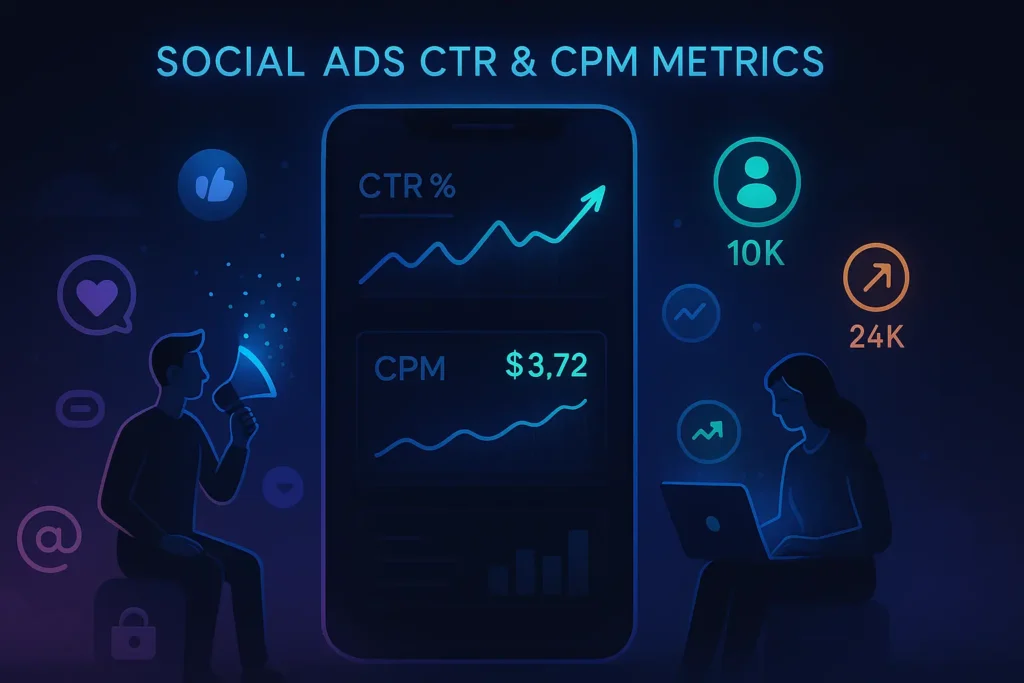
- On Facebook, average CTR across industries has been reported at ~0.90% (one click per ~110 impressions) in recent years.
- On TikTok, a traffic campaign saw a CTR of ~4.93% in one recent study, significantly higher than Meta’s ~2.54%.
- Average CPM for Meta (Facebook/Instagram) in 2026: ~$6.59.
Why It Matters for Arbitrage
Social ads can deliver high traffic volumes and offer powerful targeting at scale. But keep in mind — users on these platforms are usually browsing, not actively looking for a product or solution. That means success in arbitrage depends less on intent and more on engagement.
For example, to earn revenue through ad impressions or downstream actions, your landing page needs to keep visitors around. This is why user engagement — time on site, page views, interaction — becomes more important than just attracting clicks. If done right, this model can work very well with social traffic sources.
Best Fit If:
- You want to grow traffic fast, beyond just search-based keywords
- Your landing page is built to make money from user engagement and ad views
- Your creative assets (images, videos, headlines) are strong and attention-grabbing
⚠️ Caution: Because users aren’t actively searching, low-quality creatives or poorly optimized pages can hurt your results fast. Keep an eye on key metrics like bounce rate, average time on page, and revenue per session to make sure your traffic volume is actually turning into profit.
🧩 Researching Keywords that Deliver Low Costs and High Returns
Choosing the right keywords is key to keeping acquisition costs low while driving high-quality, relevant traffic. Keywords that show clear intent tend to perform better because users already have a specific interest that matches the content on your landing page.
Use this checklist before scaling spend on any keyword:
🔍 Intent & Relevance
- ☐ Keyword clearly matches the topic of your landing page
- ☐ User intent is informational, comparison-based, or action-oriented
- ☐ Page content answers what the user is actually looking for
💰 Cost & Competition
- ☐ CPC fits within your acceptable margin range
- ☐ Competition level allows consistent traffic without sudden cost spikes
- ☐ Long-tail variations are available (not just one expensive term)
📊 Early Performance Signals (Test Phase)
- ☐ Bounce rate stays within a healthy range
- ☐ Time on page shows real engagement (not instant exits)
- ☐ Ad impressions per session meet your monetization threshold
- ☐ Revenue per visit trends upward during small tests
🚦 Scale or Kill Decision
- ☐ CPC remains stable after initial testing
- ☐ Engagement improves as volume increases
- ☐ Net returns justify scaling budget
- ☐ Kill quickly if costs rise faster than earnings
🔑 Pro Tip
Never scale keywords based on volume alone.
Consistency, engagement, and margin stability matter far more than raw traffic numbers.
🧩 Building Landing Pages That Convert Traffic into Revenue
If you’re looking to profit from search arbitrage, your landing page is one of the most critical elements to get right. This is where the monetization happens — and how well your page performs directly affects how much revenue you can earn from each visitor.
Key factors like structure, content relevance, and ease of navigation all play a vital role in whether users engage with your site or bounce right away.

Key Components of High-Converting Arbitrage Landing Pages:
✅ Relevant Content
Ensure the page aligns with the ad the user clicked.
If your ad promises specific information, your content must deliver. Relevance keeps bounce rates low and trust levels high.
✅ Readable Layout
Use clear headings, short paragraphs, and mobile-friendly formatting.
Most users skim on mobile. Clean structure helps them navigate quickly and find what they’re looking for.
✅ Fast Loading Speed
Slow pages kill engagement.
A 1–2 second delay in load time can dramatically reduce the number of users who stay. Use lightweight code and optimize media.
✅ Optimized Ad Placement
Position ads where they’re visible, but not intrusive.
Ads should integrate naturally within the content. Avoid interrupting the reading flow or overwhelming the user experience.
✅ Continuous Testing
Run A/B tests on layouts, headlines, content sections, and CTA placements.
Ongoing experimentation helps uncover small tweaks that increase revenue per session over time.
🧠 Pro Tip: Focus on Engagement First
A well-structured landing page does more than display ads — it encourages natural interaction. The more users scroll and engage, the more ad impressions you earn and the higher your chances of profitable outcomes. Think of engagement as a revenue multiplier in arbitrage.
🏁 Final Thoughts
Landing pages are where arbitrage campaigns either succeed or fail. By focusing on clarity, speed, relevance, and strategic ad placement, you create an experience that keeps users on the page and drives consistent earnings.
The result? Lower bounce rates, higher session values, and more sustainable arbitrage at scale.
🧩 Choosing Monetization Methods That Maximize Ad Revenue
How you monetize a landing page has a direct impact on the value of each visitor. Different ad formats, networks, and monetization strategies perform differently depending on your audience behavior, content depth, and traffic intent. What works well in one niche or vertical might underperform in another — which is why ongoing testing and refinement are critical.

Key Factors That Influence Monetization Performance:
✅ Ad Relevance
Ads that closely match the content tend to attract more natural engagement. When ads align with what the user is already reading or looking for, interaction feels organic — leading to higher click-through rates (CTR) and revenue.
✅ Ad Placement
Where you place ads on the page significantly affects visibility and user experience.
- Ads that appear too early or interrupt content can increase bounce rates.
- Well-placed ads integrate smoothly into the layout, boosting engagement without being disruptive.
✅ Ad Format Selection
Different ad formats work better in different contexts:
- In-article and sticky units often perform well on mobile.
- Native ads blend naturally with editorial content.
- Display banners might work best in visually rich or desktop-heavy environments.
Choosing the right format depends on page design, device type, and visitor behavior.
✅ Revenue Metrics to Track
To understand what’s working, keep a close eye on:
- RPM (Revenue per Mille): How much you earn per 1,000 impressions
- CTR (Click-Through Rate): A measure of ad engagement
- Revenue per Session or per Visit: Key for arbitrage-focused traffic models
These metrics help you optimize both layout and monetization choices.
🤝 Choose the Right Monetization Partners
Long-term success isn’t just about the ads themselves — it’s also about who you work with.
As Golam Kibriya often emphasizes, partnering with transparent, reputable ad networks helps maintain both revenue stability and site credibility. Reliable platforms also offer better reporting, compliance support, and protection against bad ads or policy violations.
🧠 Final Thoughts
Monetization isn’t a one-size-fits-all setup. The best approach depends on your niche, your traffic, and how users interact with your page.
To maximize revenue:
- Keep testing different formats and placements
- Review performance data regularly
- Choose partners who offer transparency and support
- Balance revenue with user experience
The result? A more profitable, sustainable monetization strategy that adapts as your traffic evolves.
🧩 Setting Up a Profitable Arbitrage Campaign
Building a profitable arbitrage campaign starts with understanding the relationship between traffic cost and on-page earnings. Monitoring metrics like CPC (cost per click) and RPM (revenue per mille) early on helps you determine whether a campaign has real profit potential—before scaling your budget.

🔧 Key Setup Steps:
- Select keyword groups that closely match your landing page topic and user intent
- Begin with conservative bids to manage traffic costs
- Structure campaigns clearly for easy performance tracking
- Analyze early data to evaluate campaign viability
- Refine targeting and creatives before increasing spend
Running small test campaigns upfront helps you eliminate weak setups quickly and boosts targeting efficiency from the start.
🚀 Core Metrics to Monitor:
- CPC: How much are you paying for each click
- RPM: Revenue per 1,000 page views—shows monetization strength
- CTR: Click-through rate, or how often users engage with ads
- Bounce Rate: High bounce rates can signal poor relevance or bad UX
- Session Duration: Longer sessions usually mean better content engagement
Reading these metrics correctly helps you spot winning patterns and fix problems before they grow.
🧠 Best Practices for Safe Scaling:
Scaling can grow your revenue—but if done carelessly, it can also eat into your margins. A disciplined, data-driven approach helps you expand without introducing unnecessary risk.
- Only scale campaigns that show consistent profitability
- Increase budgets gradually to watch for cost spikes
- Track CPC trends as volume increases
- Optimize your landing pages before driving more traffic
- Diversify traffic sources to avoid over-dependence on any one channel
As Golam Kibriya often emphasizes, sustainable growth comes from controlled scaling and constant optimization—not from chasing volume blindly.
🔍 Typical Problems:
Search arbitrage campaigns can face several common issues that hurt profitability. Proactive testing and structured analysis can help you navigate and resolve these challenges.
- Rising traffic costs that shrink your margins
- Landing pages that don’t hold user attention
- Ad revenue that declines over time
- Poor traffic quality with low engagement
- Platform policies that restrict your campaigns
✅ Solutions:
- Test different traffic sources and formats
- Continuously improve landing page UX and content
- Monitor RPM and session data to spot underperformance
- Stay updated with ad network compliance guidelines
- Focus on long-term optimization, not short-term fixes
By addressing root causes rather than reacting emotionally, you build more resilient, profitable campaigns.
🧩 Best Practices for Running Sustainable Arbitrage Operations
Long-term success in arbitrage isn’t just about traffic or quick wins—it’s about consistency, compliance, and putting the user experience first. While short-term gains may seem attractive, sustainable growth comes from playing by the rules and continually improving content quality and performance.
Key Best Practices for Sustainable Arbitrage
🛡️ 1. Follow Platform Guidelines
Always stay compliant with ad network policies and traffic platform rules. Violations can lead to account suspensions or permanent bans, which can disrupt even the most profitable campaigns.
🎯 2. Maintain Content Relevance
Ensure that your landing pages match the intent behind the incoming traffic. When users find what they’re expecting, bounce rates drop, and engagement increases—leading to higher revenue per session.
🧭 3. Prioritize Clean User Experience
Design pages with the user in mind:
- Use clear navigation
- Keep layouts clean and readable
- Optimize loading speed for mobile and desktop
A smooth experience keeps visitors on the page longer, increasing the chance of ad engagement and return visits.
🔁 4. Continuously Test and Improve
User behavior and traffic patterns shift over time. Regular A/B testing of landing pages, headlines, content blocks, and ad placements ensures your site stays optimized for both engagement and monetization.
📌 5. Target Traffic with Clear Intent
Focus on traffic sources where users have mid to high intent. Chasing large traffic volumes without alignment to content goals often leads to low engagement, high bounce rates, and wasted spend.
🧠 Final Thought
These best practices reduce operational risk and support long-term growth—even as competition and ad costs rise. By focusing on compliance, user value, and continuous optimization, you create arbitrage campaigns that are not only profitable—but resilient and future-proof.
🧩 Frequently Asked Questions About Search Arbitrage
❓Q 1. Is search arbitrage still profitable in 2026?
Yes, search arbitrage remains profitable in 2026—if campaigns focus on traffic relevance, controlled costs, and strong landing page monetization. Success depends more on how well the campaign is executed than on traffic volume alone.
❓Q 2. How much money do you need to start search arbitrage?
There’s no fixed starting budget, but most campaigns begin with small test spends to validate traffic quality and monetization. Starting small reduces risk and helps identify what works before scaling up.
❓Q 3. What is the biggest risk in search arbitrage?
The biggest risk is sending low-quality or misaligned traffic to landing pages that fail to engage users. This leads to high bounce rates, low RPM, and shrinking margins—even when traffic costs are low.
❓Q 4. How long does it take to see results from an arbitrage campaign?
You can typically see early performance signals within a few days, but it often takes 1–2 weeks of testing to gather enough data to make reliable decisions about engagement, revenue per visit, and cost efficiency.
❓Q 5. Can beginners succeed with search arbitrage?
Yes, beginners can succeed by starting with:
- Simple landing page setups
- Conservative daily budgets
- Content that monetizes well through engagement
Gradual learning and testing are far more effective than rushing into large-scale campaigns.
❓Q 6. How do you know when to stop or scale an arbitrage campaign?
Only scale a campaign when revenue per visitor consistently exceeds acquisition cost. If engagement declines or CPC increases faster than earnings, it’s time to pause, reassess, or stop the campaign entirely.
Learn more in our guide on How to Scale Arbitrage Safely
🧩 Call to Action
If you’re looking for a smarter and more strategic way to make money from paid traffic, now is the perfect time to apply these search arbitrage methods. Learning how to profit from search arbitrage becomes far more effective when you combine careful planning, reliable tracking, and ongoing testing—and you don’t have to learn it all on your own.
Whether you need help launching your first campaign, improving your landing pages, or building a full monetization system, Golam Kibriya can guide you with practical advice based on real experience.
Start optimizing your ad-traffic strategy today.
Explore more insights, connect for collaboration, or request a personalized analysis for your next project.
Let’s build smarter, more profitable campaigns—together.